Concrete Leveling & Polyjacking
Concrete Leveling & Polyjacking in Athens, GA
Lift sunken driveways, walks, patios and garage floors with foam instead of tearing them out, in Athens-Clarke and nearby towns.
Signs a Driveway, Walk or Garage Slab Has Dropped
Concrete leveling starts with seeing the drop. Why the slab dropped is harder to see. Each sign below can have more than one cause, and only an inspection confirms which one.
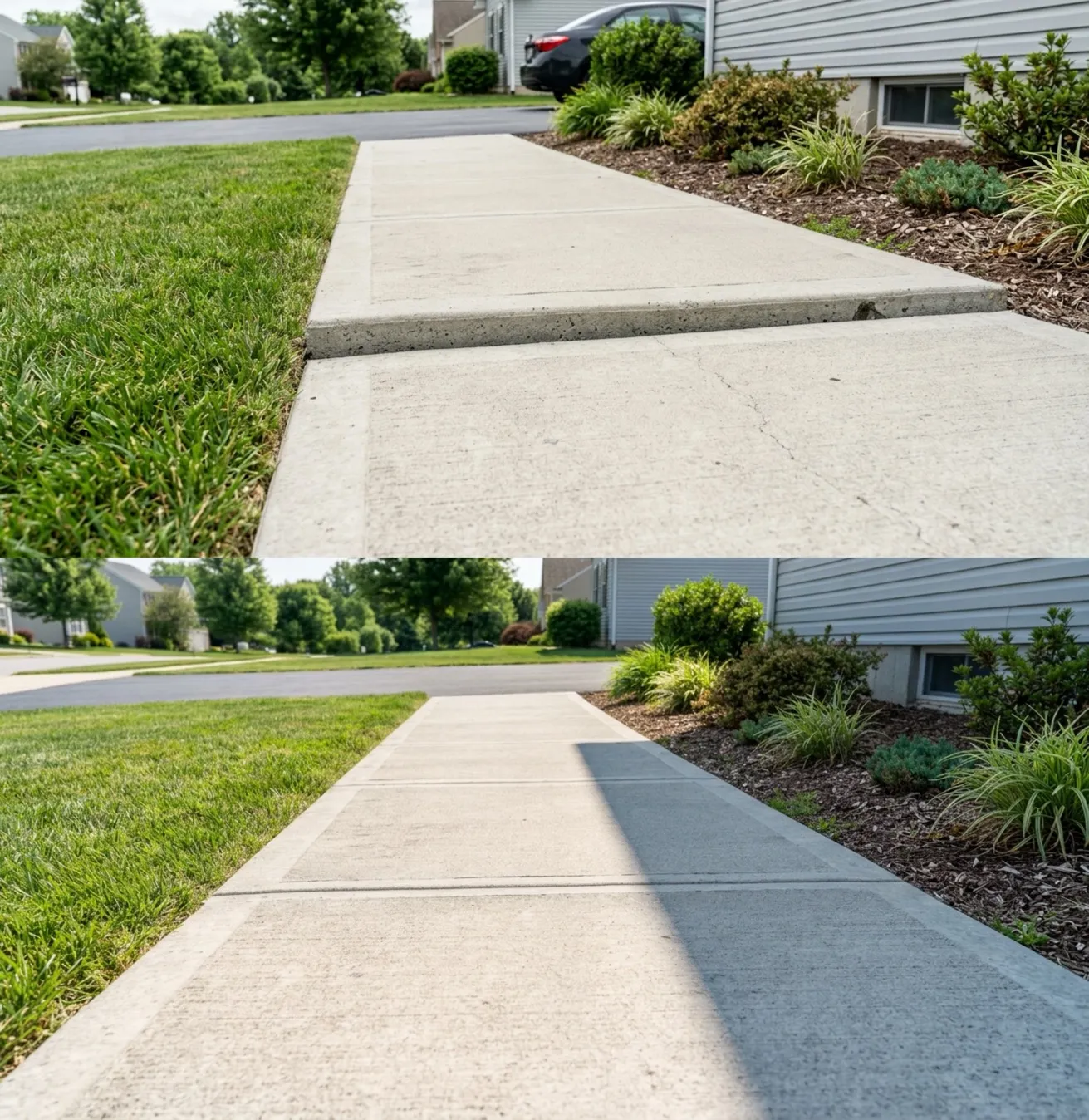
- A driveway or walk section sits lower than the next one. The ledge is a trip hazard. The ground under the low section may have settled or washed out.
- A garage floor slopes or has dropped near the door. Soil under the edge may have moved.
- A patio or porch slab tilts toward the house. Rain then runs toward the wall. The drainage and water control page covers moving that water.
- A gap opens between the slab and the house wall. The slab may have sunk, or the wall may have moved. A visit tells the two apart.
- Water pools on a slab that used to drain. A change in slope may be the reason.
- A hollow sound when you tap the slab, or a dark gap at its edge. A void may have formed beneath it.
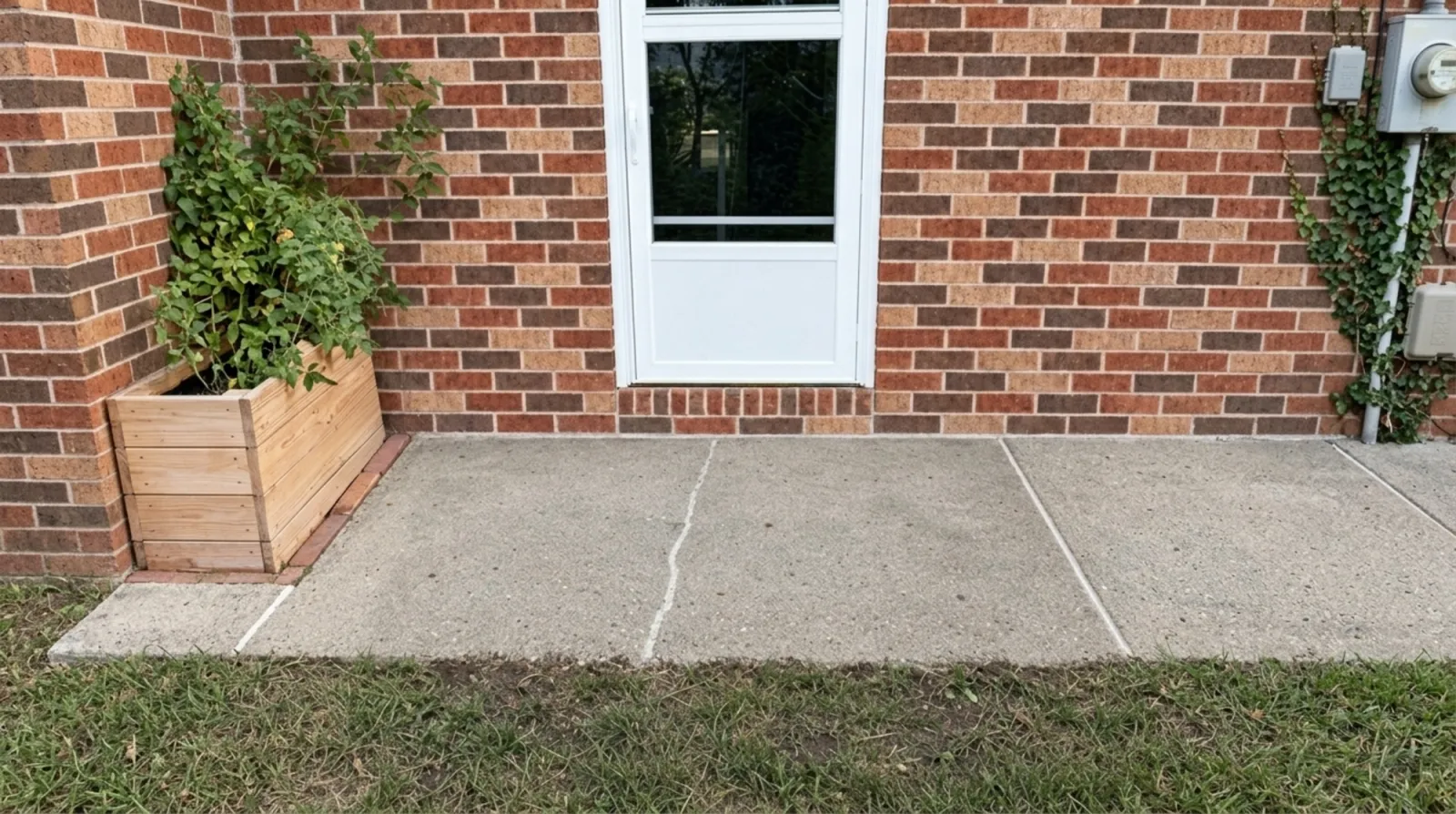
- A crack with one side lower than the other. The slab may have lost support on that side. Some cracks are only surface cracks, so a look is needed.
If the house walls also show cracks or sticking doors, see foundation repair and piering.
Concrete Leveling or a New Pour for Athens Slabs
Concrete leveling has several choices. The right one depends on the slab's condition and on what is under it.
| Option | What it does | Fits when | Limits |
|---|---|---|---|
| Polyurethane foam lifting (polyjacking) | Small holes are drilled in the slab. Foam goes in through them, spreads under the slab and lifts it. | The slab is still in one solid piece and has a void or soft spot under it. | It does not change why the slab dropped. It cannot repair a slab that has broken apart. |
| Cement slurry lifting (mudjacking) | A cement and soil mix is pumped under the slab through larger holes. | A heavy, thick slab needs a fill that is cheap to place. | The mix is heavy and can add weight to ground that is already weak. The holes are larger. |
| Grinding or patching a raised edge | Shaves down the high side of a ledge or fills the low side. | Only a small lip is the problem. | The slab stays tilted and any void stays under it. |
| Replacing the slab | Breaks out the old concrete, prepares the ground and pours new. | The slab is cracked into pieces or the surface is crumbling. | More mess and more time on site. The cause of the settling still has to be fixed. |
| Deeper support such as piers | Carries a slab that is part of the foundation on supports that reach firmer ground. | The slab ties into the house and the house has moved too. | Belongs to foundation repair, not simple slab lifting. |
How a Slab Lift Goes, Step by Step
- Look at the slab. For concrete leveling, a contractor walks the driveway, walk, patio or garage floor. They check how far each section dropped and whether the concrete is sound enough to lift.
- Look for the cause. They check for running water, loose fill, a void or a leaking pipe. Lifting only lasts if what caused the drop is dealt with.
- Drill and inject. Concrete leveling with foam begins with small holes drilled in the slab. The contractor places foam under it in stages and watches the slab rise.
- Check the level. The contractor stops when the slab sits flat and matches its neighbors. The holes are then filled and sealed.
- Fix what caused it. If water is the cause, gutters, grading or a drain are the next step. The contractor tells you when the surface is ready for use.
What Moves the Price of a Slab Lift
Every slab is different. These things move the price of concrete leveling.
- How many slabs need work and how large they are.
- How far each one dropped and how thick the concrete is.
- Whether the slab is sound or cracked into pieces.
- How easy it is to reach the slab and drive equipment up to it.
- Whether a void, running water or a pipe leak must be fixed first.
- Which lifting method the contractor picks.
- Whether the slab is a loose driveway or walk, or ties into the house.
A free estimate shows the cost for your slabs. Start on the estimate page.
Soil, Rock and Rain Facts for Athens Slabs
These public facts bear on concrete leveling in Athens. They describe the area, not your lot.
- Soil survey. The USDA NRCS Soil Data Access sample, queried 2026-10-09, covered 104 natural points in Clarke County. All 104 had a low linear extensibility rating, which is the soil survey's measure of shrink-swell. Oconee, Jackson and Barrow counties showed the same result. The sample describes the soil series at a point, not any property.
- Soil series. NRCS series descriptions list Cecil and Madison soils with low shrink-swell potential. They describe red clay subsoil over saprolite. Pacolet, which has 39 Clarke sample points, is described as well drained with red clay subsoil.
- Ground depth. The USGS Ground Water Atlas says rock in the Piedmont is covered by regolith. It says the saprolite in it is up to about 150 feet thick in places and varies a great deal. A contractor checks what lies under each slab.
- Rainfall. NOAA's 1991-2020 normals for the Athens airport station give 48.95 inches of precipitation a year. That is one station, not every town we serve.
The 2020-2024 Census estimates (ACS 5-year) show 39.5% of Clarke County housing units built before 1980. Oconee, Jackson and Barrow counties have median build years from 1998 to 2002.
Concrete Leveling & Polyjacking Questions in Athens, GA
Can concrete leveling in Athens, GA be done instead of replacing a driveway?
If the slab is still in one solid piece, concrete leveling with foam can lift it back into place. Broken or crumbling concrete may need replacing. A visit shows which.
Does Georgia red clay make slabs sink?
The soil survey sample found low shrink-swell ratings at every natural point in Clarke County. Slabs can still drop for other reasons, such as washed-out ground. Only an inspection shows the cause.
Will lifting a slab stop it from sinking again?
Lifting fills the gap under the slab but not what made it. If rain keeps washing soil out, the slab may settle again. A drain or gutter change may help.
Can I use my driveway right after it is lifted?
The contractor will tell you when the foam has set and the surface is ready. Follow that advice for your slab. Do not park on it before then.
Is a sunken slab by my house a foundation problem?
It may be only the slab. If cracks or sticking doors show up in the house too, ask about a foundation inspection and structural evaluation. A licensed and insured contractor will look it over and give you a free estimate.
Contact Us Today for a Free Estimate
Concrete leveling fits sunken slabs with more than one possible cause, and the soil survey sample found low shrink-swell ratings in Clarke County. An inspection shows what is under yours. A licensed and insured contractor will look it over and give you a free estimate.